
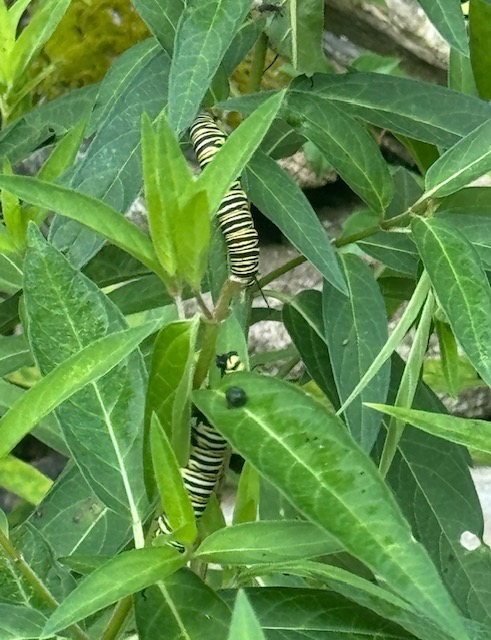
In early August, a wandering monarch butterfly found a perfect spot to lay her eggs. A few weeks later, the milkweeds in the Barbara Johansen Pollinator Garden were full of her caterpillars.
Monarchs lay their eggs singly on the underside of their host plants which include common and swamp milkweeds, as well as, butterfly weed. All of these were planted in the garden in hopes of creating a Monarch nursery.
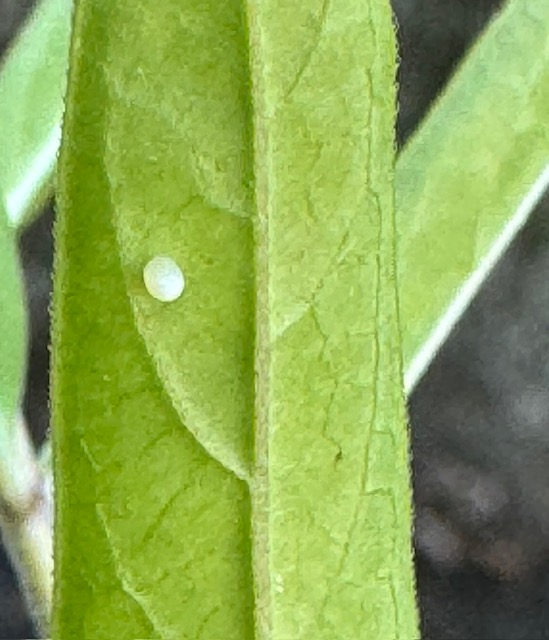
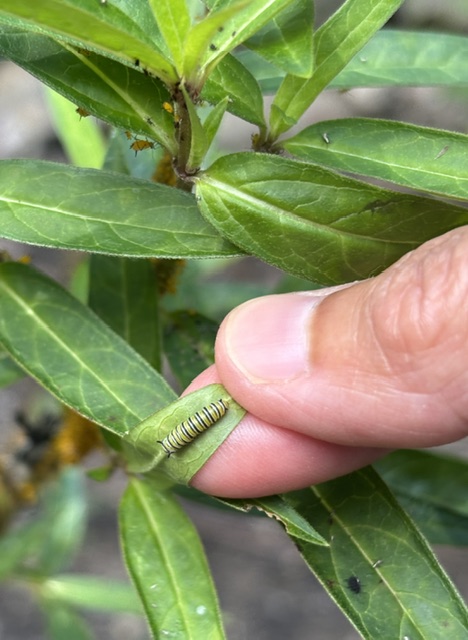
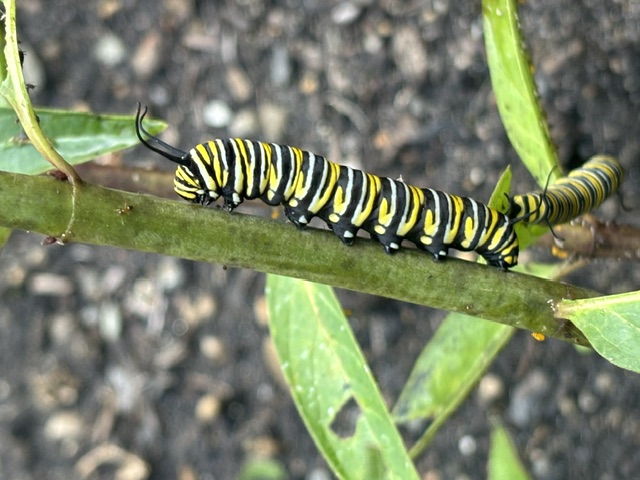
According to the Connecticut Butterfly Atlas, monarch eggs hatch within 3 to 5 days. The yellow, black and white striped caterpillars feed on the leaves of their host plants for 14 to 20 days. When ready to pupate, they form a cocoon (chrysalis) which is the last stage of their development before transforming into butterflies. The adult butterflies emerge from their cocoons within 10 to 15 days. The entire metamorphosis from egg to caterpillar to chrysalis to adult takes between 4 to 5 ½ weeks.
Below are photos of newly hatched and mature caterpillars and a chrysalis observed in August in the Barbara Johansen Pollinator Garden.

Monarchs are a migratory species known for traveling long distances. The eastern variety overwinters in high-altitude fir forests of central Mexico where they cluster together by the millions between November and March. They begin their journey northward in the early spring and delay mating until they reach the southern coast of the U.S. They die soon after reproducing and successive generations slowly make their way north. Monarchs arrive in Connecticut in late May.
Each new generation (flight) of adult lives between 2 and 6 weeks and there are several flights per season. The last generation born in late summer, however, is genetically programmed to live 8 to 9 months. This is long enough for them to migrate 3,000 miles, spend the winter in Mexico, and make the return trip to the southern states. It is a truly astonishing feat for such a small and delicate looking creature.
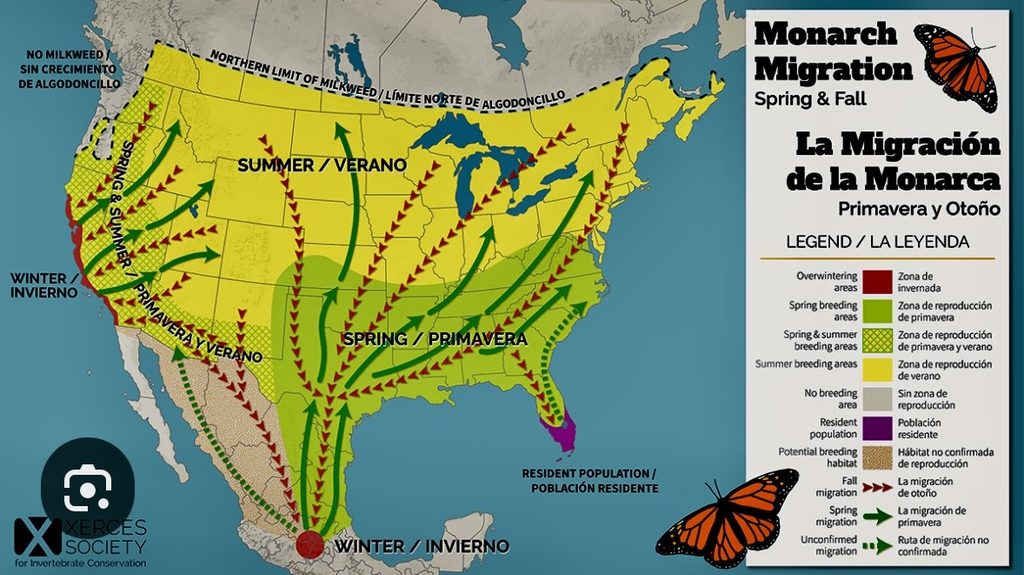
The survival of Monarchs has been challenged in recent years due to habitat degradation and the disappearance of both their host and nectar plants from the landscape. Pesticides, herbicides and extreme weather events have also contributed to the butterfly’s declining populations.
Monarchs need protection on a local level, as well as, along their migratory routes.
Their caterpillars can only digest plants in the milkweed family (Asclepias) so a female must lay her eggs on these host plants or they won’t survive. Once mature, the adult butterflies are able to feed on the nectar of many different kinds of flowers. They are especially drawn to asters, black-eyed Susans, goldenrod, ironweed, Joe-Pye weed, purple coneflowers, sage, verbena and zinnias.

The Barbara Johansen Pollinator Garden is just one of NCLT’s monarch-friendly habitats. Our meadow preserves at Colhoun, Hannan-Eberstadt Field, Livingston-Higley, and Silvermine Fowler offer abundant milkweed and butterfly weed to nourish caterpillars, and plenty of native field flowers that sustain breeding and migratory adults.

The mystifying monarch’s life cycle is a wonder to behold and it is gratifying to be part of the Monarch Highway. How cool (and a bit mind boggling) it is to ponder that our late summer caterpillars may grow up and travel all the way to Mexico.
Fabulous photos!
Congratulations on the success of the Barbara Johansen Pollinator Garden!
Also, a special thank you to Susan Bergen for this excellent article, one of the many, many informative articles she has written for the NCLT! Her tenure as a Trustee has been a gift to us all! Thank you for your efforts that benefited the NCLT, its members and the residents of our town.
Thank you so much for your kind words.