
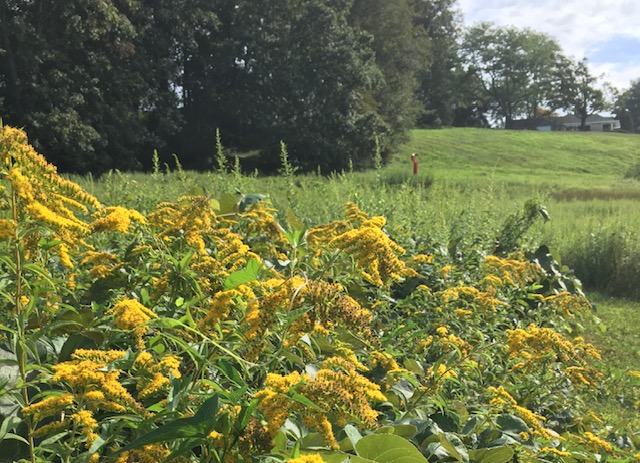
In early fall, the wildflower meadows at the New Canaan Land Trust mirror the sun with a prodigious bloom of goldenrod. Bees, flower flies, butterflies, moths, beetles and wasps all come to feast on the nectar and pollen. Year-round resident and migrating birds snatch up the seeds. The stalks left standing at the end of the season sustain birds and wildlife through the winter.
For many years, goldenrod (genus Solidago) has been much maligned by farmers, landscapers and home gardeners. It has long been considered an ‘unwanted weed’ due to its aggressive spread and tendency to crowd out neighboring plants. Today, however, goldenrod is recognized as one of the best native plants to sustain pollinator and wildlife habitats. It belongs to the aster family and is listed by The Xerxes Society as one of the “top five outstanding native perennials that attract the highest diversity and abundance of pollinators.”
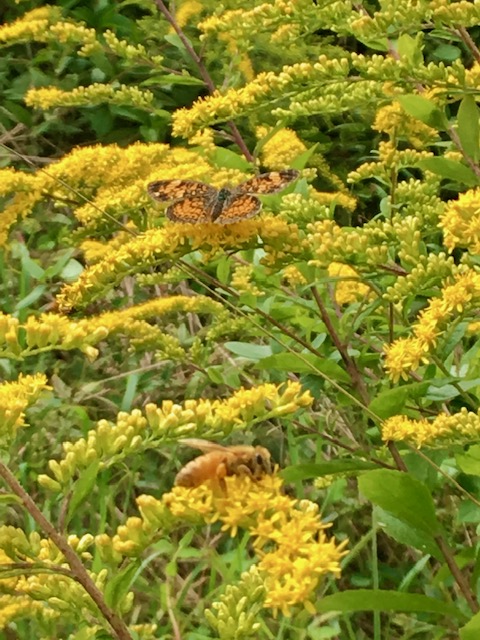
butterfly and a honeybee at Livingston-Higley Meadow
Goldenrod is often confused with Mugwort (Artemesia vulgaris) which is a tall, aromatic perennial originally from Europe, Asia and North Africa. Mugwort is wind-pollinated and releases massive amounts of pollen into the air which can trigger seasonal allergies. It is a misconception that goldenrod causes hay fever as well. Goldenrod does not release its pollen into the wind. The pollen granules are too heavy to be airborne and the flowers need to be cross pollinated by insects.
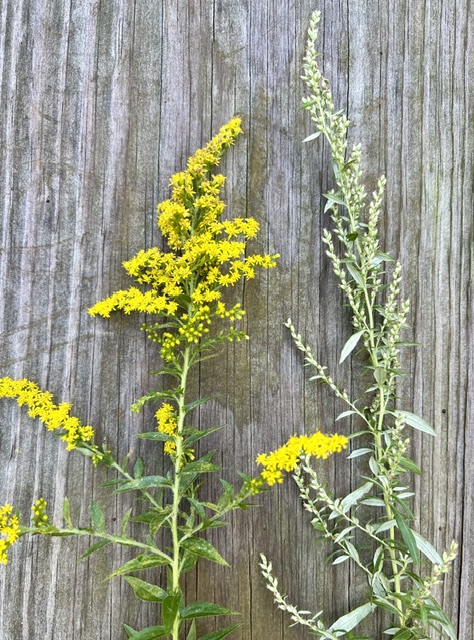
Mugwort (right) has pale green flowers that resemble unopened buds
Connecticut has 25 different species of goldenrod with varying bloom times beginning in mid-summer and stretching through early frost. They provide a key source of late season food in meadow, wetland and woodland habitats. Most varieties prefer full or part sun while some are suitable for shade, such as Zigzag goldenrod as seen below.

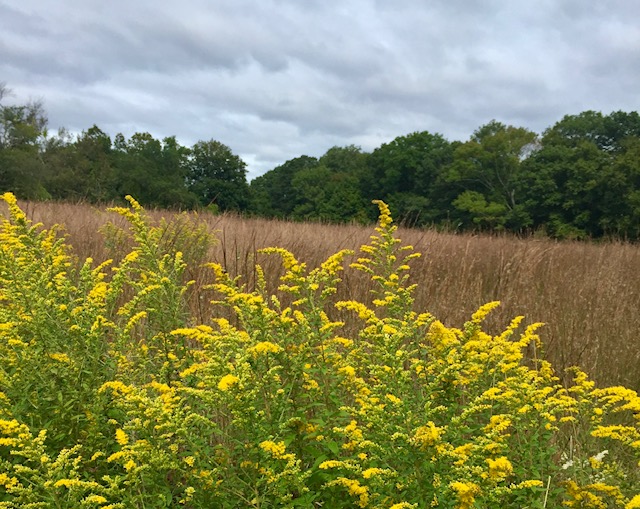
Below is a collection of photos taken at our Colhoun, Hannan-Eberstadt Field, Livingston-Higley and Still Pond Preserves.


Take a walk this fall and witness the diverse life that goldenrod brings to our meadows.
Recent Comments