

The leaves are falling and the droning of leaf blowers can be heard all over town as homeowners and landscapers attempt to remove every speck of leaf from our managed outdoor spaces. The current trend of keeping our home landscapes as neat and pristine as our living rooms is wreaking havoc on our natural habitats. Before blowing and carting away all the leaves, consider how they benefit the plant, animal, and human world.
Fallen leaves create year-round habitats for a multitude of wildlife by providing food, shelter and moisture. They also serve as nurseries and overwintering sites, especially for insects, whose populations are in steep decline. Many insects pass the winter in the larval stage, hunkered down in leaf mulch. Butterfly and moth caterpillars often hibernate in leafy compost, as do queen bumblebees and other pollinators. Below are woolly bear moth (left) and swallowtail butterfly caterpillars searching for a place to hibernate amidst fallen leaves.

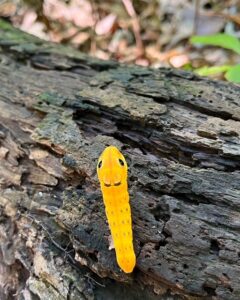
Spicebush Swallowtail caterpillar
Land-dwelling turtles, frogs, toads, and salamanders seek moisture and sanctuary year-round in leaf mulch. They also depend on a heavy cover of leaves during hibernation. Wood frogs, eastern box turtles and red-backed salamanders are just a few of the cold-blooded animals that thrive in damp leafy habitats.
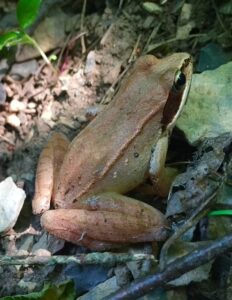
Wood Frog


Decomposing leaves release nitrogen, phosphorus and potassium which increase soil fertility. If you leave them in your garden, you’ll reap the benefit of free, natural, organic fertilizer. Leaf mulch creates an ideal environment for earthworms, who aerate the soil, and fosters bacteria and fungi, which enable plant, shrub, and tree roots to absorb essential nutrients from the soil.
Leaves on the ground hold in moisture and reduce evaporation during dry spells. They also insulate the soil from summer heat waves and severe winter cold snaps. Leaf mulch absorbs moisture more efficiently than turfgrass or bare ground, and it mitigates runoff and erosion during heavy rain.
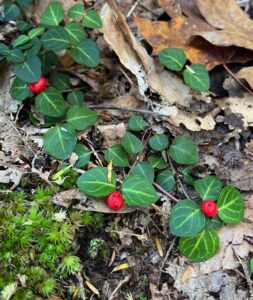
Native plants, such as violets, trout lilies and partridge berries (below) thrive in woodland settings with a thick layer of mulch.
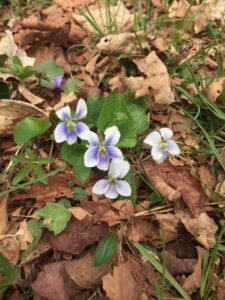
Common Blue Violet
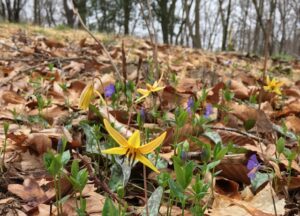
As fallen leaves play a crucial role in bolstering healthy ecosystems, removing all of them from the landscape also removes the life and potential life that they support. It is time to reconsider the prevalent ‘mow and blow’ practice and appreciate how leaf decomposition enhances our natural environment.
Recent Comments