

A quiet stream at Browne Preserve
The New Canaan Land Trust protects acres and acres of wetlands, streams, ponds and vernal pools. These watery habitats are vital to the health of our ecosystems, our wells and drinking water. Wetland and riparian plants hold soils in place and prevent erosion. Their roots filter impurities from rainwater, as well as chemicals and fertilizers that seep from suburban lawns into watercourses. The plants sequester carbon. Through photosynthesis and decomposition they recycle oxygen and nitrogen.
Ponds, streams and wetlands are home, nursery and sanctuary for countless species of insects, frogs, turtles, birds and mammals. They offer a peaceful refuge where we can all connect with nature.
Featured below is a sampling of water features found on some of our open preserves. Come, visit and observe what goes on throughout the seasons.

Vernal pools on the Oneoke Green Link
The Oenoke Green Link is a six-acre sanctuary with a ¼-mile-long walking trail that connects Irwin Park with the New Canaan Nature Center. It crosses vernal wetlands which are wet in winter and spring and dry in summer. They are ideal nurseries for frogs and toads who lay their eggs in water. The pools stay wet long enough for the eggs to hatch into tadpoles and for the tadpoles to mature, breathe air and move onto land. As vernal pools dry out by summer, they don’t support fish populations who prey on amphibian eggs.
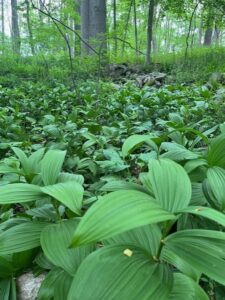
Wetland habitat at Watson Symington
Watson Symington’s forty-seven acres covers a variety of terrains including two ponds, several streams and extensive wetlands. An abundance of water-loving plants, such as false hellebore (pictured above) and skunk cabbage, filter impurities from rainwater and hold soils in place to prevent erosion. Their flowers attract pollinating beetles and flower flies.
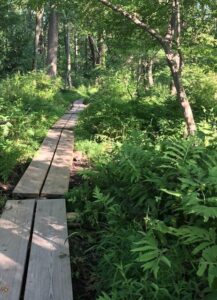
Colhoun Wetland Boardwalk
The nineteen-acre Colhoun Preserve protects two meadows, a beech forest and several acres of wooded wetlands. A series of boardwalks passes over small streams and marshy areas that support an abundance of ferns, wildflowers, and understory shrubs such as summer sweet and witch hazel. The thick undergrowth creates a perfect nesting habitat for song birds and a great habitat for deer, foxes, coyotes and bobcats.
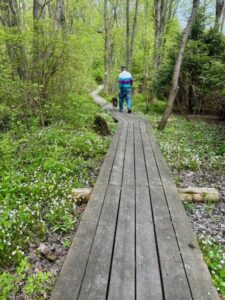
Boardwalk leading to the Livingston Higley Meadows
Livingston Higley encompasses fourteen acres of woodlands, wetlands and wet and dry meadows. The boardwalk leading out to the meadows crosses a stream and boggy area. It is flanked by spring beauties, blue flag iris, jewelweed, buttonbush and other flowering wetland plants that offer pollen, nectar, seeds and berries to pollinators, birds and wildlife.
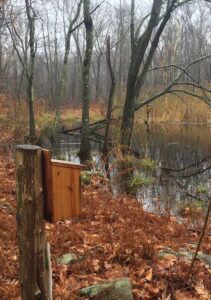
Still Pond
Still Pond Preserve is a forty-seven acre sanctuary that includes Hicks Meadow, Kelley Uplands and the Silvermine Fowler Pollinator Meadow. Anchoring all three properties is Still Pond and its extensive wetlands which are part of the Silvermine River watershed. The pond teems with life. Frogs, turtles, newts, dragonflies, red-winged blackbirds and herons are just a few of the wild creatures who live in and around it.
The NCLT protects over four hundred acres of open space which make us the largest private landowner in town. Our seventy properties and easements lie in four different watersheds which drain into the Silvermine, Five Mile, Noroton and Rippowam Rivers. These rivers, in turn, flow through adjacent towns and eventually into Long Island Sound. Stewarding our wetlands, streams and ponds at ‘home’ has far reaching impacts. We are safe guarding clean water and natural habitats for the benefit of all who live here and beyond.
Informative article. Protected open space in these upstream NC watersheds protects well water in our community (about half of NC is on well water) as well has downstream neighbors in Stamford, Darien, Norwalk and LI sound.
Robin
Enjoyed your newsletter, Lot of Activity !
My birds over budget on Birdseed. I feed them Wagner Eastern .
My best-Herb